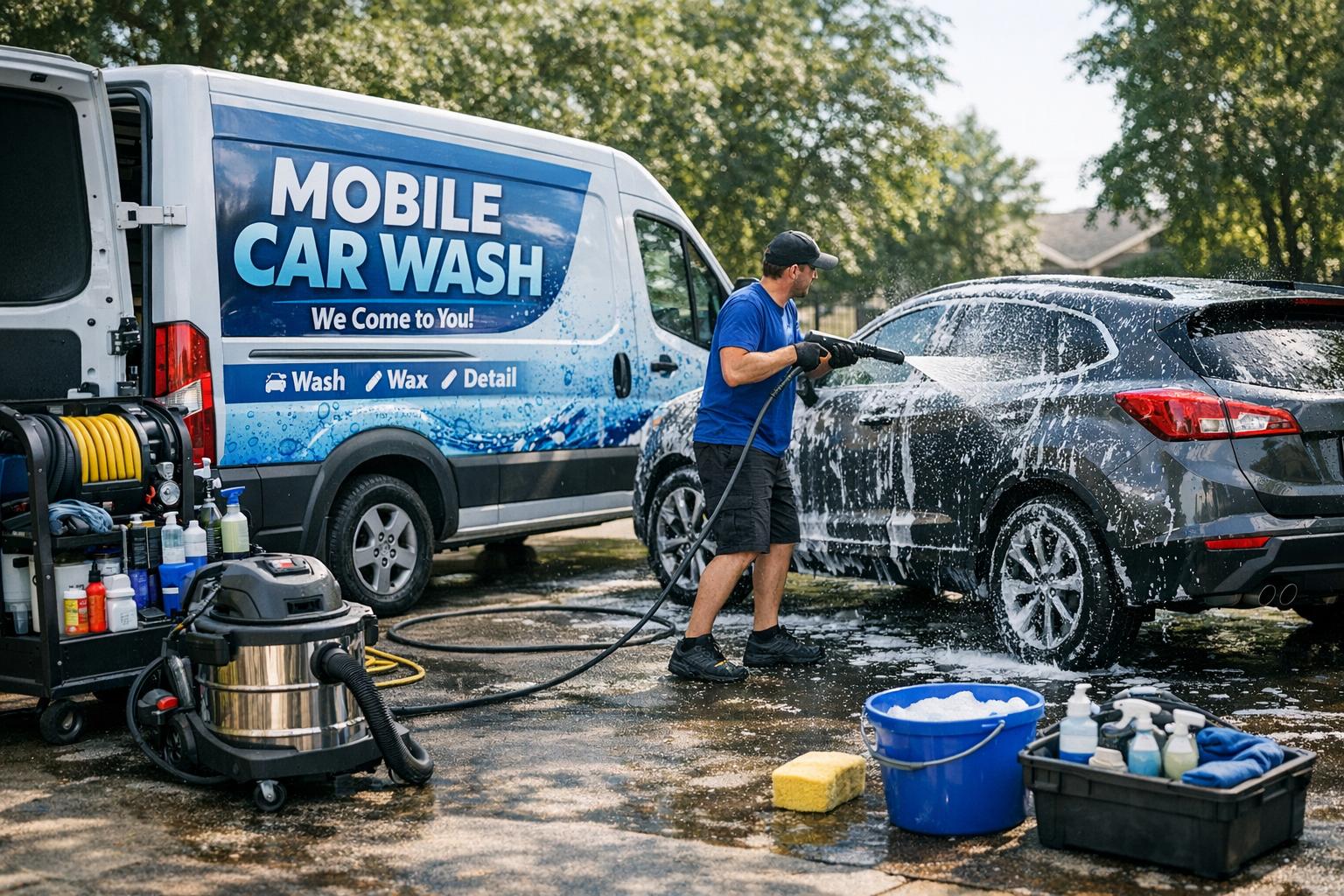
A mobile car wash business is exactly what it sounds like: you bring the cleaning to the customer. Instead of customers driving across town to reach a wash bay or waiting for a shop slot, you show up—homes, apartment parking lots, office garages, construction sites, and fleet yards—and clean cars where they sit. That shift from “go there” to “someone comes to me” sounds simple, but it carries real business value because it reduces common friction points: time, logistics, and coordination.
The model also tends to have a lower startup barrier than a typical fixed-site car wash. You usually aren’t signing long leases, building plumbing systems, or paying for a constant flow of staff just to keep the lights on. That said, “low overhead” doesn’t mean “no overhead.” Mobile operations still have costs, risks, and operational constraints—especially around water use, scheduling, and equipment reliability. If you plan for those early, the business can scale without turning into a headache farm.
Industry overview: where mobile car washing fits
The broader automotive services space includes mechanical work, paint and body repair, interior detailing, restoration, and safety-related services. Mobile car washing lives in the cleaning side of that world, but it overlaps with detailing too. In practice, customers often use the same search terms for both: they want their car clean, and ideally they want it clean in a way that looks better than “just a rinse.”
Mobile detailing and washing is typically separated into two service categories:
- Exterior cleaning (wash, wheel cleaning, drying, protective wax or sealant)
- Interior cleaning (vacuuming, dashboard and console wiping, cupholder detail, upholstery cleaning, stain or odor treatment)
Demand depends on basic things you’d expect: vehicle ownership, local weather, household income, and how busy people are. In denser areas—cities and suburbs—demand often holds up better because customers have less time to travel. In rural areas, the same service can still work, but you often need a wider radius and slightly different scheduling expectations (more travel time per job).
Another major driver is regulation. Some regions push hard on water discharge and stormwater runoff. You’ll see more interest in low-water or waterless methods where rules are strict. That doesn’t mean traditional wash methods are dead; it means your water plan matters more than it used to.
Business model and revenue streams
The core revenue model is straightforward: you charge for cleaning services. The trick is structuring services so customers understand what they’re buying, and so you can deliver consistently without turning every job into a bespoke art project.
Common pricing structures
Most operators price based on a combination of vehicle size and service depth:
- Basic wash for lighter soil (often exterior-focused)
- Standard service that usually includes interior vacuum and dashboard wipe
- Full detail with more thorough interior work and more detailed exterior steps
- Premium add-ons like stain removal, odor treatments, headlight restoration, and paint enhancement
Vehicle size matters because time and consumables change. A small sedan is one workflow; an SUV, truck, or van adds surface area, interior volume, and sometimes additional steps for trim and floor conditions.
Add-on services that actually sell
Add-ons work when they solve specific problems customers notice quickly. Common examples include:
- Headlight restoration for foggy or yellowed lenses
- Odor removal (especially for pet odors, smoke smell, and mildew)
- Scratch or scuff improvement (often a “paint correction lite” approach)
- Ceramic spray and protective coatings that make the car easier to maintain
- Upholstery spot cleaning for spills and tracked-in grime
You can offer these as priced extras. The advantage is obvious: you increase average order value without bloating your core process. The challenge is also obvious: if you promise results you can’t deliver, you’ll end up doing the same job twice—one for the customer, one for your reputation.
Recurring revenue: fleets and subscriptions
One of the steadier ways to earn is recurring schedules. That can include:
- Corporate office contracts for employee parking lots
- Delivery and service fleets that need regular cleaning to look professional
- Rental or property management for turn-over and resident vehicles
Subscription models can work for residential customers too, but the subscription angle often fits better for fleet and commercial clients. They have repeat needs and less negotiation each time. If you’re starting out, even one fleet contract can smooth your cash flow enough to help you plan purchases.
Seasonality
Seasonal patterns vary by region, but most businesses see changes in demand due to weather:
- Spring and early summer: steady to strong demand, often driven by pollen, mud, and “new season” car care
- Winter: demand depends on road salt and local weather; some services rise (salt removal), others drop if people reduce discretionary spending
- Rainy periods: fewer “quick exterior wash” bookings, but interiors and detailing can still sell
The goal isn’t to pretend seasonality will disappear. It’s to adjust your service mix and scheduling times so you don’t get stuck with a calendar full of hopeful maybes.
Startup requirements: what you actually need
Starting costs for a mobile car wash business can be significantly lower than a fixed-site facility, but you should avoid being overly optimistic. If you choose cheap equipment and weak supplies, you’ll pay for it later in breakdowns, slow job times, and inconsistent results.
Core equipment
Most mobile operators buy or assemble a basic kit that includes:
- A vehicle (van, truck, or SUV-based setup)
- Water tanks and hoses or a way to connect to the customer’s water supply
- A pressure washer (for traditional exterior cleaning)
- Vacuum system for interior work
- Microfiber towels and drying tools (often overlooked in “starter lists”)
- Cleaning chemicals (car-safe soaps, APC if used appropriately, wheel cleaners)
- Brushes and detailing mitts
- Protective gear and safety supplies (gloves, eye protection)
If you’re thinking “I’ll just buy the smallest setup and upgrade later,” that can work—but it still means you should plan your first year around growth. If you don’t, you’ll constantly re-buy gear because your standards changed.
Water management: customer supply vs your own tank
Mobile operators often have two approaches:
- Connect to customer utilities: you use their water and electricity with permission
- Carry your own supplies: you rely on your tank volume and onboard power
Carrying your own water and power can make you more independent, but it increases equipment weight and setup time. Using customer hookups can be faster, but it requires clear communication and good relationships with property managers and homeowners.
In water-restricted areas, you’ll see more adoption of low-water or waterless methods. You can still run traditional systems if you follow local rules, but you need to be honest about water use and runoff control.
Insurance and permits
Insurance is one of those “boring” parts of starting a business that still decides whether you can keep operating after a stressful day. Typical coverage includes:
- General liability (property damage, accidents)
- Commercial auto insurance for the business vehicle
- Equipment coverage (depending on policy setup)
Permits vary by jurisdiction. Some places pay attention to wastewater disposal, storm drain runoff, and the use of chemicals. If you plan for compliance early, your business looks more professional—and you avoid the situation where a local rule shuts down your schedule for an entire week.
Operational considerations: scheduling, workflow, and “show up, do it right”
Mobile work is part logistics, part cleaning, part customer service. If you only focus on the cleaning, you’ll still run into trouble because time matters and travel eats time whether you like it or not.
Scheduling and routing
Appointments aren’t just dates on a calendar. They’re a chain of time blocks involving drive time, setup time, and actual cleaning time. Efficient routing can reduce wasted miles and improve daily capacity.
Digital scheduling tools help with bookings and reduces back-and-forth messages. Even if you start with a simple booking method, you want customers to understand:
- service start time windows
- what you need access to (water, parking space)
- how to handle reschedules due to weather
Mobile businesses live and die by communication clarity. The best cleaning can still get a bad review if the customer thinks you “ghosted” when you were actually stuck driving in traffic.
Time management and job sizing
A common mistake is underestimating time for full detailing when you’re new. The exterior wash might be quick enough, but interior cleaning often expands when you deal with stains, pet hair, or heavily soiled carpets.
A practical approach is to define three things early:
- Your standard workflow for each service tier
- Your estimated time ranges for each tier
- Your limits (for example, exterior-only is not the same as full paint correction)
That way, you don’t promise a “full interior detail” in 45 minutes and then scramble later. Customers usually understand time estimates if you’re consistent and professional.
Weather planning
Your schedule can get knocked around by rain, extreme heat, and cold conditions. Rain can delay exterior-focused visits, but it doesn’t eliminate interior detailing demand. Heat affects chemical performance and drying time; cold conditions affect how quickly water and certain products behave.
Instead of treating weather as a disaster, treat it as a variable. Adjust your offer. For example, “interior refresh” may still be a sellable service on rainy days, while “full rinse and wax” might need a dry window.
Wastewater and runoff handling
One of the most important operational topics is wastewater management. When you wash a car, runoff can include dirt, brake dust, oils, and chemical residue. Local rules often restrict how and where that water can go.
You can reduce compliance risk with practical measures such as:
- using chemicals designed for safe use
- controlling runoff and preventing it from entering storm drains
- using reclaim systems where required or advisable
If you’re unsure about the rules in your area, it’s worth checking early rather than after you’ve done a few dozen jobs and learned the hard way.
Marketing and customer acquisition: getting booked without screaming discounts
Mobile services rely on local demand. That doesn’t mean you should only advertise in one neighborhood and hope for miracles. It means you should be precise about where your customers are and how they search.
Local online presence and SEO basics
A professional website with service descriptions, service area, and simple booking options helps. You can also support discovery by being consistent with your business name, address (if you use one), and phone number across platforms.
For search visibility, customers often look for phrasing like “mobile car wash near me” or “car detailing at my location.” Your content should reflect your actual services and the regions you travel to.
The goal isn’t to write essays just for Google. It’s to answer the questions customers ask: price tiers, what’s included, how long it takes, and what happens if it rains.
Social proof that isn’t fake
Before-and-after photos work because cleaning is visual. Use them responsibly: show the same angle, show consistent lighting if you can, and don’t overpromise. If you only share miracle transformations where the customer’s car arrived spotless in the first place, people will notice.
For first-time customers, a short gallery plus a clear description of your process can reduce hesitation.
Partnerships
Property managers, apartment complexes, and offices can provide recurring demand. The sales pitch is usually simple: you maintain resident or employee vehicles without them hauling cars to a wash bay.
When partnerships work, you stabilize bookings. When they don’t, it’s usually due to weak coordination (unclear scheduling, access issues, or inconsistent communication). Treat partnerships like a process, not a one-time handshake.
Retention: punctuality and fit
Mobile businesses get repeat customers when two things happen consistently: you show up and you match expectations. If you say “standard wash includes interior vacuum and wipe-down,” do that. If a car needs extra time due to heavy soil, explain it clearly and quote accordingly.
Retention isn’t about charm. It’s mostly about predictability.
Legal and regulatory issues: compliance isn’t optional
Legal requirements vary widely by region, so treat this as a general framework, not a substitute for local research.
Business licensing and taxes
Most locations require a business registration and standard licensing. Tax treatment depends on jurisdiction and business structure. If you’re handling payments yourself early on, keep clean records from day one. “I’ll get to it later” is a classic way to end up with a weekend you never asked for.
Water discharge rules
Environmental rules can restrict where runoff can go. Some areas prohibit washing that discharges into storm drains without proper containment or reclaim systems.
This affects your workflow choices: the equipment you use, where you set up, and how you handle wastewater disposal. If you plan ahead, compliance will feel like “extra steps.” If you ignore it, compliance will feel like “a notice from a person who enjoys paperwork.”
Chemical and safety compliance
Chemical handling rules may apply depending on the strength of products you use. You should store chemicals safely, follow label instructions, and use proper PPE when needed.
In addition, many jurisdictions expect businesses to dispose of used chemicals and wastewater appropriately. If you lease equipment or outsource disposal, confirm that the vendor’s processes align with local rules.
Zoning and activity restrictions
Some cities restrict commercial activity in residential neighborhoods. Your setup might be interpreted as a business operation on private property or in public parking areas. If you plan to service residential drives, property-managed lots, or street parking, it’s worth confirming what’s allowed.
Equipment and technology: improving speed without ruining results
The right equipment reduces both labor time and rework. Technology also helps with scheduling and payments, but it doesn’t clean cars—people do that part.
Cleaning equipment trends
Pressure washers remain common for exterior cleaning, but operators increasingly consider efficient versions that reduce water waste. Steam cleaning can support sanitation and interior work with less chemical reliance, though you still need to know where steam is safe (some materials don’t love it).
For paint enhancement services, dual-action polishers and appropriate pads can assist with paint correction. But if you’re just starting, you should resist the urge to offer high-end correction immediately. Learn the process, then sell the result.
Vacuum and drying
Interior cleaning often depends on vacuum strength, nozzle design, and filter maintenance. Drying impacts streaking. A good drying system—microfiber towels, drying aids, and proper technique—can improve finish quality faster than adding extra products.
Digital payments and business software
Contactless payments reduce awkward delays. Most operators accept cards, mobile wallets, and digital transfers. Booking and customer management systems can help track:
- appointment history
- service packages sold
- repeat customer schedules
- notes about vehicle condition (pet hair, frequent stains, preferred products)
GPS tools improve routing, especially in busy areas. You don’t need fancy tech for this. You just need fewer dead miles.
Labor and staffing: scaling without losing quality
Many mobile operators start solo. That works because you control standards and reduce payroll risk. The staffing question usually comes when calendar demand rises and you can’t service everything alone without either raising prices or cutting corners.
Hiring and training basics
If you hire, training matters as much as equipment. You want consistent technique for:
- chemical mixing and dwell times
- safe use on delicate surfaces
- interior material handling
- customer communication
Employees are also working on private property. Background checks and clear conduct expectations are reasonable steps. You’ll also need a written procedure for how to handle surprises, like visible damage on delivery that might confuse a service review.
Labor cost control
Labor is often the largest controllable expense after your service costs. A low-quality workflow creates wasted time, which costs money. If two people perform the same “standard wash” vastly differently, your operation won’t scale cleanly.
Set measurable productivity standards for each service tier. Keep it practical: you want people to deliver consistent results at predictable times, not sprint through cleaning like they’re late for a bus.
Financial performance and profitability: where margins really come from
Profitability in mobile car washing depends on average ticket size, job capacity, and the cost to deliver each job. If your costs creep up—fuel, chemical prices, equipment repairs—profits shrink quietly, like a slow leak in a tire.
Major expense categories
Common expenses include:
- fuel and vehicle maintenance
- equipment repairs and replacements
- cleaning products, towels, and consumables
- insurance premiums
- marketing costs (online ads, print materials, platform fees)
- storage, water tanks, and logistics supplies
- labor (if applicable)
Break-even reality
Because you don’t pay for rent in the same way a fixed-site facility does, break-even can occur with fewer jobs than you’d expect. Still, you shouldn’t assume profitability will appear instantly.
In early months, you might spend extra time explaining pricing, traveling longer distances, or doing “extra” work because you’re learning what customers actually want. That’s normal. The business plan should account for it instead of pretending it won’t happen.
Cash flow and slower periods
Mobile businesses can face slower seasons. That’s when equipment repairs and insurance premiums still arrive like clockwork. Maintaining an emergency fund reduces the chance you’ll pause growth because cash dried up.
Track daily income and operating costs separately so you can see whether your “busy day” is actually profitable or just busy.
Advantages of the mobile model
Mobile car washing has real advantages, and they aren’t just marketing fluff.
Lower fixed costs
Without a dedicated wash bay, overhead often stays lower. You’re still paying for your tools and vehicle, but you’re not sustaining a full facility with utilities and building costs.
Service flexibility
You can adjust service zones, modify tiers, and shift focus depending on local demand. If your market responds better to interior detailing on rainy weeks, you can steer without waiting for renovations.
Convenience customers feel
People lead busy lives. When you clean the car at their home or workplace, you reduce the “time cost.” That’s part of why mobile service can command premium pricing in many areas.
Better upsell opportunities
A customer is standing nearby and watching you work. That provides a natural “inspection moment.” When you explain what you’re doing, people often understand the value of add-ons like protective coatings or stain treatments.
Challenges and limitations: what can slow you down
It wouldn’t be honest to sell mobile washing as effortless. The model has constraints, and your job is to plan around them.
Weather dependency
Rain and extreme temperatures interfere with exterior services and can impact drying and chemical performance. You can reduce disruptions by shifting service mix and offering interior options that work regardless of weather.
Equipment reliability
If a pressure washer fails or a vacuum loses suction, the day can stall fast. Backups matter. Even small contingency planning—spare nozzles, service kits, extra towels—can prevent one broken item from turning into lost revenue.
Physical work limits
Mobile detailing can be physically demanding. You’ll be lifting equipment, bending for interior work, and standing for long service windows. If you scale too quickly without improving workflow efficiency, labor quality can slip.
Competition
Some markets have automated washes that attract price-sensitive customers. Others have local detailers who already built relationships. Your differentiation should be based on process quality, pricing clarity, and reliability—not just bigger promises.
If you’re eco-conscious, show it through practical choices: low-water methods, responsible product use, and compliance. That’s tangible, not just a slogan.
Environmental considerations: water use, runoff, and product choices
Environmental concerns have moved from “nice to talk about” to “people ask about it.” Traditional washing can use significant water and can create runoff that needs proper handling. Mobile operators don’t automatically escape the environmental discussion just because they don’t operate a big facility.
Low-water and waterless approaches
Low-water methods reduce water use while still using traditional wash equipment in controlled ways. Waterless washing is designed around specialized lubricants and microfiber systems that lift dirt without extensive rinsing.
These methods aren’t magic, but they can be effective in many conditions—especially for maintaining rather than restoring heavily neglected paintwork.
Responsible chemical use
Using properly labeled car-safe detergents and following product instructions reduces risk. If water restrictions exist where you operate, your water management strategy becomes part of your marketing and your compliance.
Many customers don’t know the technical terms. They do know if a business leaves a mess, creates a mess on their driveway, or ignores local rules.
Growth opportunities: scaling beyond the first van
Once you have repeat customers and predictable bookings, growth comes into focus. Growth usually means one of four things: expand your area, expand your services, expand your capacity through staffing, or expand through partnerships.
Geographic expansion
Expanding your service radius can increase revenue, but travel time may reduce capacity. The growth plan should account for fuel costs and scheduling delays. A larger service zone is often better approached as “add nearby pockets” rather than “drive far because marketing said so.”
Fleet and contract work
Fleet cleaning contracts can stabilize income. The challenge is coordination and scheduling discipline. Companies want punctuality and consistent standards. If you do contract work, keep documentation of your service process and communicate clearly about what’s included.
Hybrid operations
Some operators transition to a hybrid model: mostly mobile work with a small fixed area for specific services like paint correction, upholstery deep cleaning, or specialty treatments that benefit from a controlled setup.
Franchising: possible, but not mandatory
Franchising can work in mobile detailing, particularly if a brand offers standardized processes, training, and marketing support. The tradeoff is cost—franchise fees and ongoing payments. Many operators choose to grow independently first, then consider brand partnerships later.
If you’re just starting, focus on proving your service quality and repeatable workflows before you think about scaling systems.
Risk management: keep the business from tripping over itself
Risk shows up in small ways early on. You can’t eliminate it, but you can reduce it with processes and insurance.
Operational risks
Common operational risks include vehicle damage, property damage, employee injury, theft, chemical spills, and missed appointments. Mitigation usually comes from:
- training and clear procedures
- using correct chemicals and correct dilution
- documenting vehicle condition if needed
- proper storage and spill response
Written service terms can also help, particularly when customers request services outside your standard process or when they expect results that depend on pre-existing paint condition.
Financial risks
Financial risk increases when revenue depends on one or two clients or when pricing doesn’t match your costs. If you can, diversify your customer sources: residential, commercial, and fleet.
Also keep an emergency buffer for equipment failure and unexpected expenses. If you expand too quickly, a single major repair can derail a month of cash flow.
Practical operating tips that keep reviews from going sideways
Not all operational advice comes from regulations or equipment manuals. Some of it comes from the reality of being the person who has to show up and make it right.
Set expectations before you start
Confirm what’s included in the service tier. If the vehicle has heavy stains, tell the customer what’s realistic. If you need access to water or power, ask in advance. These are small conversations that save you from awkward moments later.
Bring enough consumables
Towels, applicator pads, and microfiber cloths can run out faster than people expect—especially if you focus on quality steps. Underpacking causes shortcuts, and shortcuts cause uneven results.
Keep equipment clean and maintained
Pressure washer nozzles clog. Vacuums lose suction if filters aren’t serviced. Chemicals can contaminate if storage is careless. Maintenance isn’t just for your tools; it’s for your output quality.
Use notes so you don’t repeat problems
Customers often have patterns: pet hair on one side, coffee stains in the cupholder area, hard-to-clean floor mats. Short job notes help you plan the next visit and reduce time wasted on surprises.
Conclusion
A mobile car wash business is a practical service model for entrepreneurs who want to enter automotive cleaning with lower fixed costs than a traditional wash facility. Success depends on more than having a pressure washer and a good attitude. You need predictable workflows, clean compliance around water and runoff, reliable equipment, and local marketing that attracts customers who understand the value of on-site service.
Weather, regulation, and labor demands can slow the business if you ignore them, but they don’t have to stop you. With disciplined scheduling, consistent pricing, and a service process that holds up under real-world conditions, the mobile model can produce steady income and create room for growth—without requiring you to build a car wash empire one driveway at a time.